
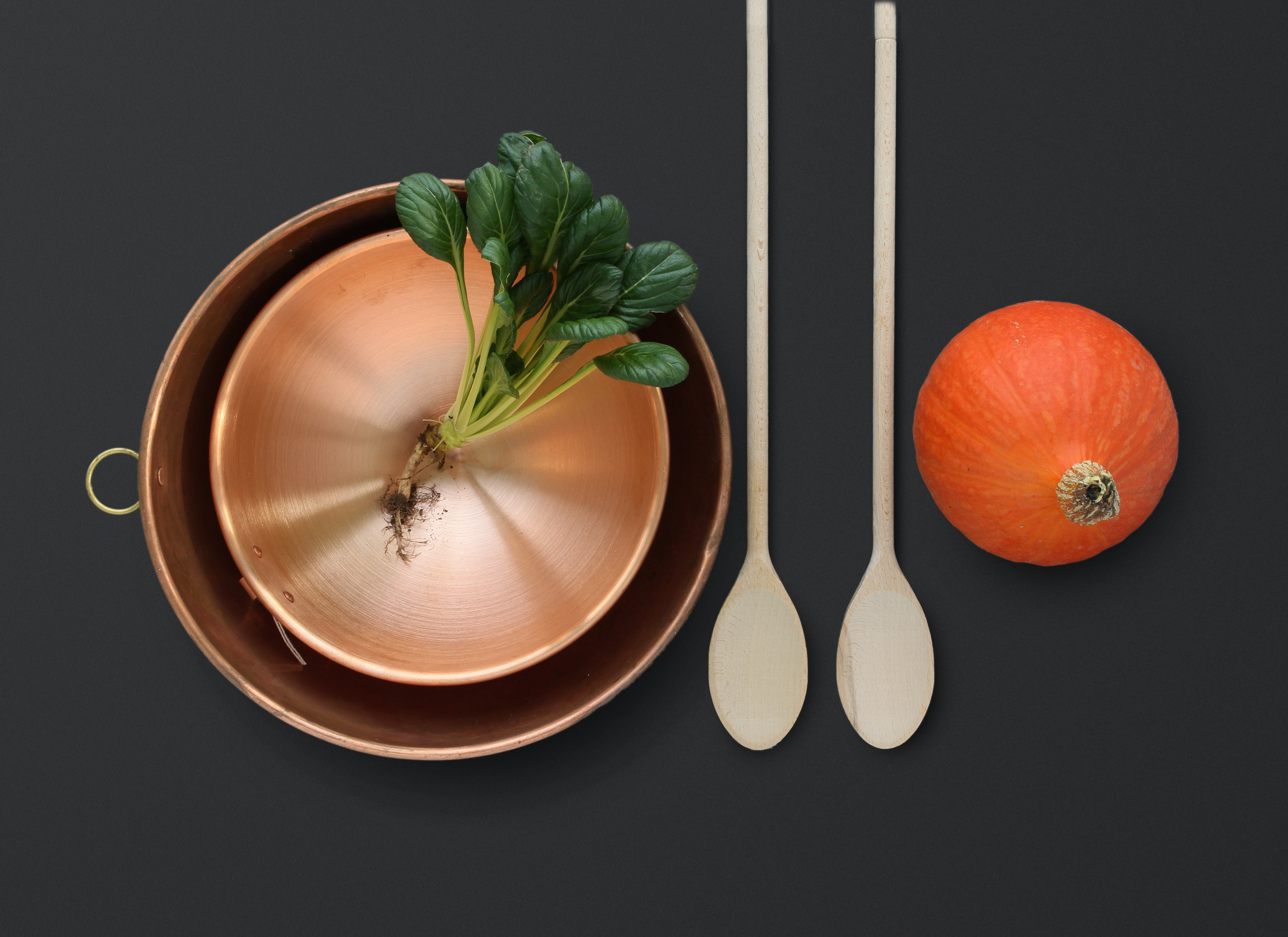
This year we grew several ‘new’ winter vegetables, For the curious, creative cook and home gardener, winter vegetables are particularly useful.
We love all the kales, romanesco, leeks, and my favourite winter tuber, Jerusalem artichokes (Helianthus tuberosus). It’s the knobbly rhizome that keeps on giving. In the US, they are referred to as sunchokes.
Every year, I wax lyrical about them, encourage you to plant some and I’m so enthusiastic that I have even offered to give a little bagful for free to get you started. The offer still stands but you’ll have to make the trip to Shanagarry to collect them as many did last year. Where you plant one in your garden this year, you’ll have 8 to 10 hidden underneath next year, how wonderful is nature? Despite their name, they are not even related to globe artichokes (Cynara cardunculus var. scolymus), they’re part of the sunflower family and will have a pretty yellow flower later in the year, fantastic for large flower arrangements.
But have you heard of my relatively new find, a vegetable called oca? They are sometimes referred to as New Zealand yams, they also are a curvaceous, colourful tuber, but can be yellow, reddish pink, or purple. The variety we grew produced delicious orangey tubers.
They too, like Jerusalem artichokes are super versatile and can be boiled, roasted, fried or eaten raw. They give a delicious crunch to salads and because oca are related to oxalis, the clover like leaves are also edible, reminiscent of sorrel.
Oca has been a staple in the Andean countries for centuries, a vitamin and mineral rich superfood, second only to potatoes in importance and super easy to grow.
They have a pleasing lemony flavour when cooked and readily take on other flavours, herbs, spices and chilli.
Cardoons are another, perhaps, unusual new seasons’ vegetable native to the Mediterranean region but they grow brilliantly in my garden in East Cork. A particular favourite of the Italians. Even though they are related to globe artichokes, they are completely different, it’s the stalks we eat not the unopened flowerheads. They are grown for their edible, celery like stems and jagged, architectural silvery grey foliage which is often used as a design feature in the garden and by florists for their purple, thistle like flowers. Bees, bumblebees and other insects absolutely adore them according to Hannah Bäckmo of Hanna’s bees.
Even though they’re perennial, cardoons take a bit of looking after. We wrap the stems in brown or newspaper a few weeks before harvesting to blanch and tenderise the stems and counteract some of the bitterness.
The thick fleshy stems are super nutritious and have a slightly bitter, nutty flavour, reminiscent of globe artichokes which I absolutely relish.
They can be braised or boiled, added to gratins, tagines and hearty casseroles, stewed, deep fried as fritters, or nibbled raw.
But first cut off the ends, remove the tough outer leaves and use the vegetable peeler to shave off fibrous strings and spines from the ribs, then cut the stalk into 2.5-5cm pieces before blanching in a large pot of boiling salted water with a squirt of lemon juice or vinegar for 10 to 15 minutes until tender. Transfer to an ice bath to stop the cooking, drain well, before proceeding with your chosen recipe.
Finally, there are feisty black radishes, I first came across them in Romania several years ago. They were in every market and virtually everyone’s shopping basket and the Romanians swore that they had miracle powers, protection against winter colds and flu, anti-inflammatory…
Since then, I’ve checked it out and many of their claims are indeed backed up by science. They are an excellent detox helping with liver detoxification, could be good news after Christmas – they also boost the immune system and are particularly beneficial for respiratory issues.
They grow to the size of a small turnip and have a feisty radish flavour when eaten raw but more mellow when cooked. Try this delicious recipe Rory O’Connell made for us last week.
Rory O’Connell’s Black Radish with Marjoram
Black radish is a vegetable that is not nearly as well known in this part of the world as it should be. It is only recently that I have begun to cook the brutish looking root that would not win any prizes in a vegetable beauty pageant. Previously, I have peeled, then sliced or grated the raw flesh into salads and that approach is both peppery and refreshing. The outer skin is jet black and rather rough to the touch, unpleasant to eat and needs to be heavily peeled away and discarded to the compost heap to reveal the white and crisp flesh. On top of the radish are a plume of green leaves which if still attached also have a role to play in this simple recipe.
The cooked radish taste very similar to a white turnip or what some cooks will call a navet and it is marvellous so think about serving with lamb, chicken, pork or bacon and they would be marvellous with duck or goose or almost any game such as pheasant, wild duck and venison.
The radish is a boon to growers of winter vegetables as it is uncomplicated to grow and sits happily in the chilly soil seemingly oblivious to any kind of atrocious weather the elements throw at it.
The purported health benefits of the vegetable are too many to mention, but one curious treatment is to cut a lid off and hollow out the root to create a bowl leaving 2cm of flesh behind. Half fill with honey, replace the lid and allow to sit at room temperature overnight. The syrupy liquid that follows is regarded as being beneficial for soothing coughs and sore throats.
Serves 4-6
Ingredients
25-30g butter
1 tbsp extra virgin olive oil
500g black radish, weighed after peeling and cut into neat 1.5cm dice
2 tbsp water
1-2 tbsp marjoram leaves chopped
salt and freshly ground black pepper
Method
Melt the butter and olive oil in a low-sided saucepan and allow to foam. Add in the prepared radish and season with salt and pepper. Toss the vegetables to coat them in the fat and seasoning and add 2 tablespoons of water. Place a disc of greaseproof paper on top to cover and follow with a tight fitting saucepan lid. Bring to a simmer and cook on a very gentle heat for 30 minutes approx. or until tender but still holding their shape. Do make sure to cook enough and equally do not overcook and reduce to a mush. You will need to test the vegetable with a skewer or small knife to make sure they are sufficiently cooked. If there is surplus liquid remaining in the saucepan once the vegetables are cooked, remove the lid and boil to reduce to a delicious syrupy glaze.
Stir in the chopped marjoram just before serving having tasted to ensure seasoning is correct. Serve hot in a hot serving dish.
Radish Leaves
If the leaves are still attached to the
radishes, that is a great and delicious bonus. I simply remove the tough
central rib, wash the leaves well and cook uncovered until tender in boiling
salted water. Strain well and chop coarsely before adding to the cooked radish
dish above at the same time as the marjoram.
Cardi Fritti (Cardoon Fritters)
This crispy fritter batter works brilliantly for many vegetables – courgette, aubergine….
Serves 6-8
Ingredients
1 bunch of cardoons (450g approx.)
1 lemon
oil for frying
coarse salt
For the batter
125g plain flour
½ tsp instant yeast
good pinch of salt
200-250ml water more or less (one could use sparkling water but, in that case, use the batter immediately)
To cook the cardoons
1 tsp salt
600ml water
1 dsp of plain flour
To Serve
flaky sea salt
lemon wedges
flat parsley
Aioli (optional)
Method
Sieve the flour, yeast and salt together in a mixing bowl. Whisk in enough water to make a smooth, pourable batter. Cover the bowl and allow to rest in your warm kitchen for at least two hours.
Use a paring knife or peeler to trim the cardoons stalks of their leaves and prickly bits along the edges. Use a peeler to remove any stringy and discoloured bits.
After you finish trimming each stalk, cut it into 7.5cm lengths approx. (or whatever size you like) and immediately pop into a large bowl of cold water with juice of a freshly squeezed lemon or vinegar otherwise, it may discolour.
Add the salt to cold water in a saucepan, whisk in the flour. Bring to the boil, simmer the cardoons until the pieces are just tender. They should have a trace of a “bite” to them and have lost their bitterness, 5-20 minutes. The cooking time will depend on the thickness and whether it is early or late in the season.
Drain the cardoons and place on a tray lined with kitchen paper until ready to eat.
To serve, heat enough extra virgin olive oil in a pan to come at least 3cm from the bottom. The oil should be very hot but not smoking (180°C approx.).
Dip the cardoon pieces into the batter, shake off the excess batter and fry them in the hot oil turning, when necessary, until golden brown on both sides (3-4 minutes). When they are cooked, transfer the fried cardoon pieces to a tray lined with kitchen paper.
Immediately sprinkle the fried cardoons with flaky sea salt, garnish with a little flat parsley. Serve right away, with lemon wedges or a bowl of Aioli.
Roast Oca
These curvaceous tubers are particularly delicious with roast duck goose or pork or added to a winter salad.
Serves 4-6 approx.
Ingredients
450g oca, washed but unpeeled (scrub well)
1 tbsp extra virgin olive oil
salt and freshly ground black pepper
lots of thyme leaves or freshly chopped rosemary
Method
Preheat the oven to 220°C/Gas Mark 7.
Cut the oca in half lengthwise and dry in a tea towel. Toss in just enough extra virgin olive oil to coat.
Sprinkle with lots of fresh thyme leaves or chopped rosemary.
Place on a roasting tray, cut side down. Season with salt and freshly ground black pepper. Roast until nicely golden, 20 minutes approx. depending on size or until tender when pierced with a fork.
Sprinkle a little flaky sea salt and some fresh herbs over the top.